How to Become a Paranormal Investigator in India: A Step-by-Step Guide by Rith Deb
You can become a paranormal investigator in India without a degree or a licence. Learn a documented investigation method. Build a small calibrated equipment kit. Study the natural causes behind most "hauntings", such as infrasound, carbon monoxide and electromagnetic fields. Practise writing case reports, and follow strict ethics with families in distress. The fastest route is structured training followed by supervised fieldwork. Rith Deb teaches this path. He was directly mentored by Gaurav Tiwari and is a core team member of the Indian Paranormal Society, with 13+ years in the field and 200+ locations investigated across India.
What is a paranormal investigator?
A paranormal investigator is a person who uses documented, systematic methodology to examine reported phenomena that fall outside conventional scientific explanation. The work covers case intake, environmental baselines, calibrated equipment, evidence assessment and written reports.
A few key terms, defined simply:
- Paranormal means "beyond normal". It describes phenomena that the current scientific framework cannot yet account for. It does not mean that ghosts or entities have been confirmed.
- Environmental baseline: the EMF, temperature, air-quality, acoustic and structural readings of a location, recorded before the investigation begins. You can only call something an anomaly when you measure it against this baseline.
- EMF meter: an instrument that measures electromagnetic field strength in milligauss (mG) or microtesla (µT). It does not detect ghosts. In an investigation it is a documentation tool.
- EVP (Electronic Voice Phenomena): unexplained voice-like sounds captured on audio recordings, which are reviewed and classified after the session.
- Infrasound: sound below 20 Hz, which humans cannot hear. Around 18–19 Hz it is linked to dread, a sense of presence and movement seen at the edge of vision.
- A paranormal investigator is not a TV-style ghost hunter, a tantric, an exorcist or a debunker by default. Investigators do not perform rituals or claim to "remove" entities. (More detail: What Is a Paranormal Investigator?)
What does a paranormal investigator actually do in India?
Day to day, a paranormal investigator in India runs a disciplined, repeatable process. Rith Deb's process has five stages. They are shaped by the scientific framework Gaurav Tiwari established and follow Indian Paranormal Society methodology:
- 1. Pre-investigation research: gather historical records, eyewitness accounts, structural surveys and baseline readings before anyone enters the location.
- 2. Environmental baseline mapping: document EMF, temperature, air quality, infrasound and structural conditions on arrival.
- 3. Controlled evidence collection: capture audio, video, photographs and instrument data, and log each item with time, location and environmental context.
- 4. Natural explanation first: rule out structural, acoustic, electromagnetic, psychological and human-error causes before considering any other conclusion.
- 5. Documented reporting: compile a formal case report. Inconclusive evidence is labelled inconclusive.
- The Indian context makes this harder. When a family reports activity, they have usually already interpreted it through religious belief and local folklore. Sometimes people selling ritual "remedies" have already exploited them. A competent investigator respects the family's beliefs and still gives an evidence-based assessment that actually helps them.
Do you need a degree or licence to become a paranormal investigator in India?
No. There is no required degree, and the title "paranormal investigator" is not regulated in India. Gaurav Tiwari, who founded the Indian Paranormal Society, trained as a pilot. Rith Deb came from a technology background. Indian Paranormal Society members over the years have included engineers, doctors, teachers and people from non-technical fields.
What matters is a set of traits:
- Intellectual honesty: you can investigate something you want to believe in and still report honestly when the evidence does not support it.
- Comfort with uncertainty: many genuine investigations end without a clear conclusion.
- Methodological discipline: the order of setup, baselines and evidence collection prevents contamination and false positives.
- Care for people in distress: the people who call investigators are scared, and their welfare comes before the investigation.
- Anyone can call themselves a paranormal investigator. Becoming a competent, ethical one takes training and corrected practice.
Step 1: Unlearn the TV version of the job
Start by separating entertainment from investigation. Ghost-hunting shows, YouTube channels and OTT horror series are made to hold viewers, not to establish evidence. Real work often means spending the first hour on baseline readings. Sometimes it means telling a frightened family that they have a carbon monoxide problem, not a ghost.
Step 2: Learn one documented methodology end to end
Learn the five-stage process above until it becomes habit: research, baseline, controlled collection, natural explanation first, report. Rith's working rule is:
"Every investigation starts with one rule — prove it isn't paranormal first. If you can't eliminate the natural explanation, you don't have a case." — Rith Deb
For the full field workflow, equipment checklist and case-report template, read Paranormal Investigation: How Professionals Actually Do It (Step by Step).
Step 3: Study the science of natural explanations
Most reported phenomena have environmental causes, so you must know them well:
- Infrasound (below 20 Hz), produced by traffic, wind, machinery and building structure. Read the infrasound guide.
- Carbon monoxide (CO). Headaches, visual disturbances, sounds with no clear source, dread and a sense of presence closely match "haunted house" reports. In Indian homes, common CO sources include LPG stoves in poorly ventilated kitchens, unserviced gas geysers, generators run in enclosed spaces, and chulhas. Read the CO guide.
- EMF variation from wiring, junction boxes and appliances.
- Acoustics, structure and psychology, including confirmation bias inside the team.
Step 4: Build a basic, calibrated equipment kit
Equipment documents conditions. It does not detect spirits. A sensible beginner kit:
- Two EMF meters, placed at fixed points. Rith uses at least two meters at every fixed measurement point so that a real localised anomaly can be told apart from instrument error. The entry-level recommendation on rithdeb.com is the TriField TF2 (₹8,000–12,000, imported). The Latnex AF-5000 is easier to find in India.
- A carbon monoxide detector. It is non-optional for residential cases.
- An audio recorder for EVP sessions, with post-session review.
- Thermal/infrared tools for temperature mapping (covered in the equipment course).
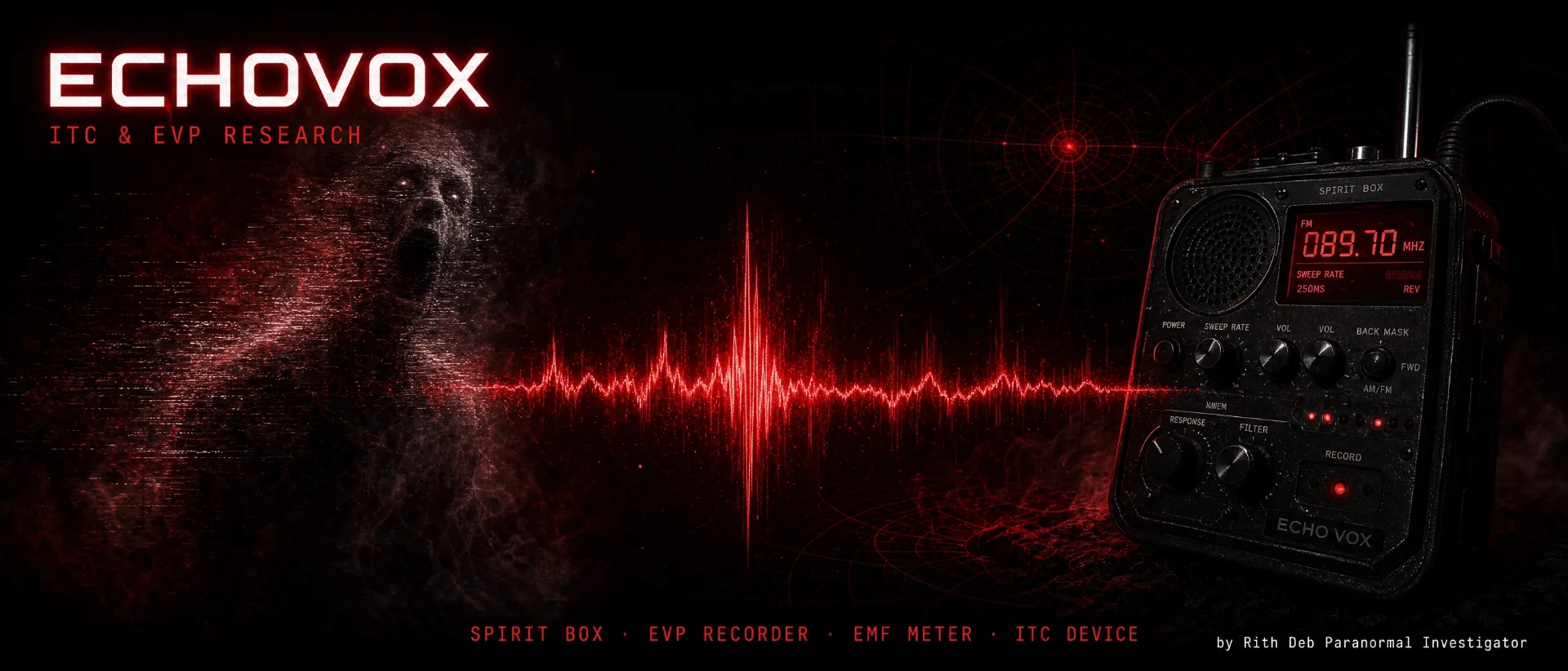
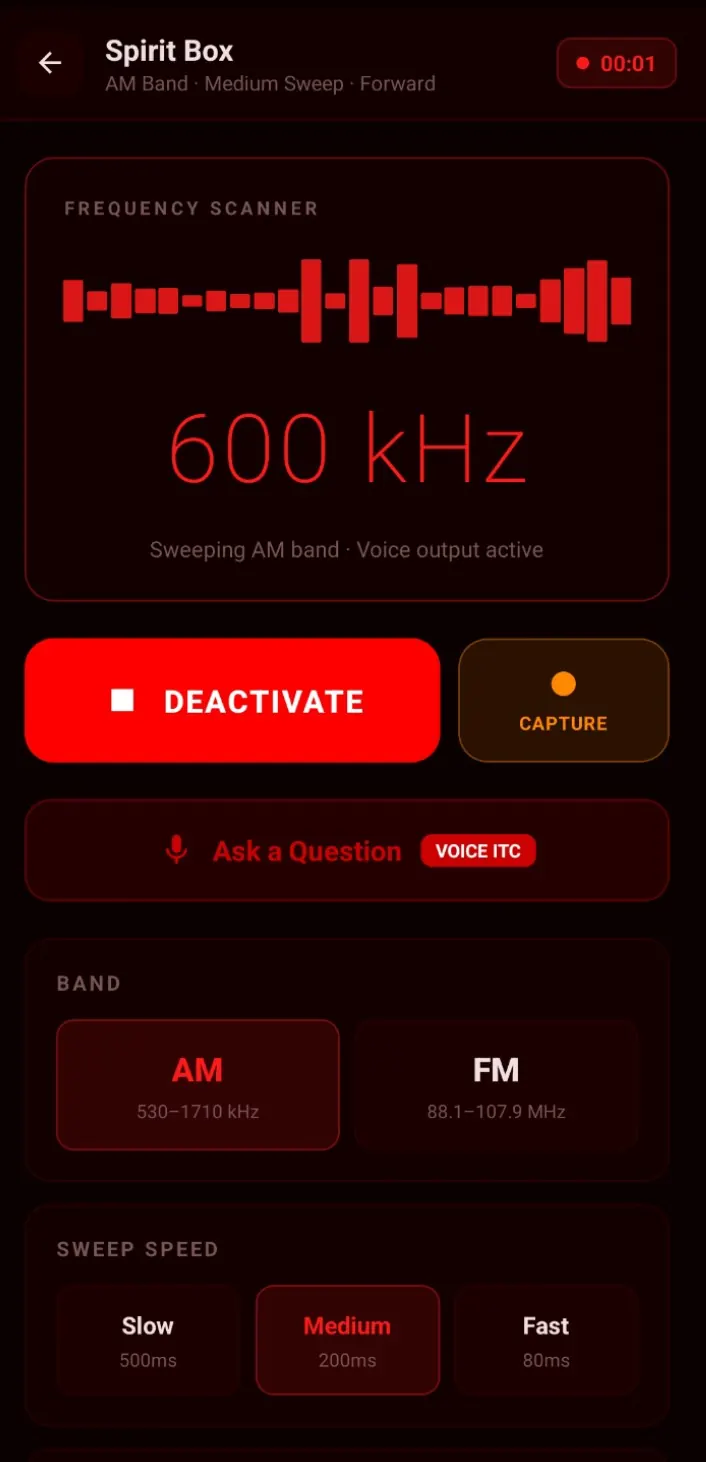
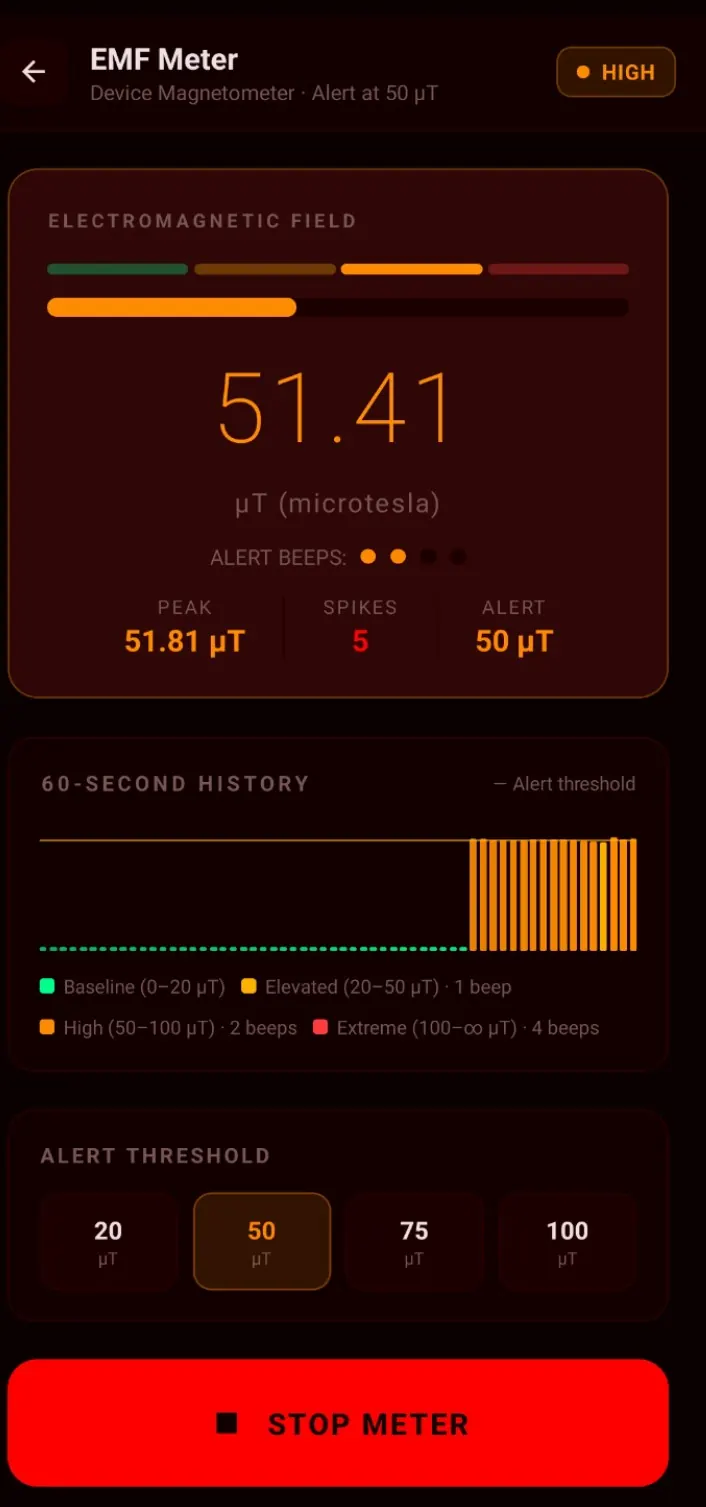
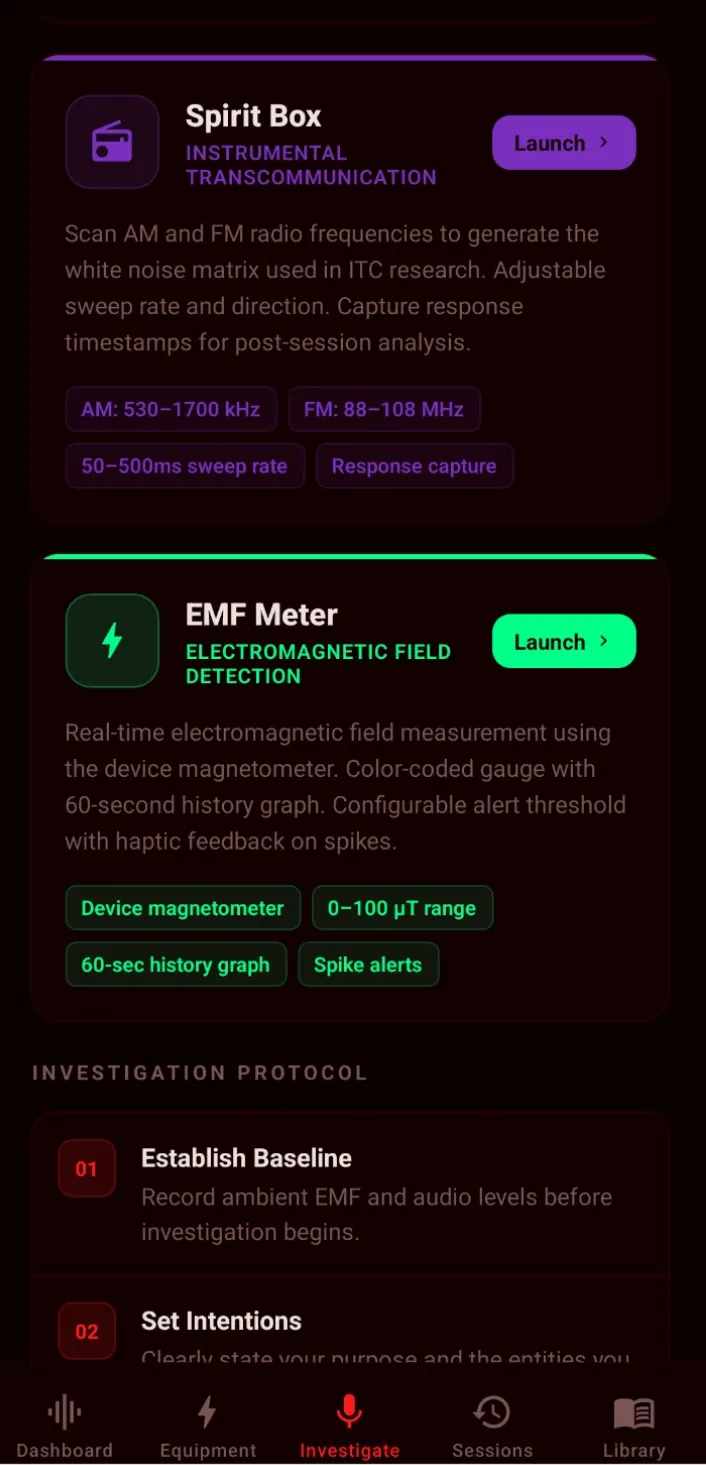
- The ECHOVOX app (free, Android only), built by Rith Deb. It combines a Spirit Box AM/FM sweep, an EVP recorder and an EMF meter (magnetometer) with spike alerts, plus ITC tools. ECHOVOX details.
- Avoid: the ₹500–1,500 "ghost detector" meters sold on Amazon India. They are not calibrated for serious investigation and react to almost anything. EMF meter guide
- Core EMF rule: a reading matters only when it is above the established baseline, in a spot with no known electromagnetic source, and repeats across several measurements.
Step 5: Take structured training before solo fieldwork
Ground yourself in methodology before you go into the field. The Rith Deb Paranormal Academy curriculum is online, in Hindi and English, and is organised as four courses:
- 01 · Ghost Hunting for Beginners (Beginner, 25 lessons + PDF workbook): what the paranormal is, types of haunting, intro equipment (EMF, EVP, thermal), investigation process, evidence and ethics.
- 02 · Equipment & Tools Mastery (Intermediate, 25 lessons + PDF workbook): advanced EMF (calibration, false positives, K2 vs TriField), EVP mastery, thermal and infrared, trigger objects and SLS camera, evidence-review workflow.
- 03 · Start Your Own Investigation Group (Intermediate, 20 lessons + templates): team roles, protocols and code of conduct, case management, client handling.
- 04 · Paranormal Investigation Masterclass (Advanced, 30 lessons): advanced case analysis, scientific debunking (CO, infrasound, EMF illness), Indian Paranormal Society investigation standards, live case breakdowns, building a public profile.
- Fees: Course fees will be announced at the Academy launch, with Founders' pricing for early members. Join the waitlist.
- Waitlist members receive a free introductory lesson pack covering ghost-hunting fundamentals, EMF basics and Rith's field methodology. See all courses · Enter the Academy
Step 6: Practise documentation until it is automatic
Documentation is the core product of a paranormal investigation. Every case should produce a written report: what was reported, what was investigated, what was found, what was explained and what remains unexplained. Log every reading with time, location and conditions. Use a case-intake checklist: when the phenomena started, how many people experienced them, recent changes to the location, and any health changes in the household.
Step 7: Learn the ethics, especially in the Indian context
- Put the family's safety first. If CO symptoms appear, test for CO before doing anything else, and send people to a doctor when needed.
- Do not perform rituals, take money for "remedies" or claim to remove entities.
- Treat locations, individuals and communities with discretion and respect.
- Do not sensationalise ambiguous evidence for content. The investigation comes first, and any content comes from what the investigation actually produced.
Step 8: Join an experienced team, or build your own
Fieldwork under experienced investigators is where you get corrected. Once you are ready, Course 03 covers team structure (lead, equipment, documentarian, safety), protocols, case intake and client communication.
Learn about the organisation Gaurav Tiwari founded in The Indian Paranormal Society: From Gaurav Tiwari to Today.
For the official starting point and membership boundaries, read How to Join the Indian Paranormal Society.
How to choose a paranormal investigation course in India
Use this checklist to judge any course, including Rith's:
- Methodology over thrills: does it teach baselines, natural-cause elimination and report writing?
- Science content: does it cover infrasound, CO and EMF false positives?
- Ethics module: does it address client welfare and the ritual-remedy market?
- Real field experience: is the instructor's casework documented?
- Language: can you learn in the language you think in? Rith's courses are in Hindi and English.
- Clear fees and refund terms: see the refund policy. For Rith's courses, fees will be announced at the Academy launch, with Founders' pricing for early members (waitlist).
Is paranormal investigation a career in India?
Paranormal investigation is a legitimate field of work in India. The Indian Paranormal Society has practised it at a serious level since Gaurav Tiwari founded the organisation in 2009. Whether it becomes a full-time career depends on how you structure your practice. Most serious investigators combine case work, teaching, writing and media collaboration.
About the author: Rith Deb
Rith Deb is a paranormal investigator and author based in Kolkata, India. He has 13+ years in the field and 200+ locations investigated across India. He was directly mentored by Gaurav Tiwari, founder of the Indian Paranormal Society, and is a core team member of the Indian Paranormal Society. He carries forward the evidence-first standard that Gaurav Tiwari built.
- Author of How to Become a Paranormal Investigator (Rupa Publications) and AI vs Jobs.
- Contributor to the research behind the Amazon MX Player series Bhay: The Gaurav Tiwari Mystery. IMDb-listed.
- Featured in the Times of India, mid-day, India Today, NDTV, News18, Zee and Pinkvilla.
- Creator of the ECHOVOX field research app.
- Read Rith's full bio · Rith's investigation methodology · What Gaurav Tiwari taught me
Next step
Join the Academy waitlist and start with Ghost Hunting for Beginners. Investigation enquiries: academy@rithdeb.com.
FAQ
How do I become a paranormal investigator in India?
Learn a documented investigation method, study the natural causes of reported phenomena (infrasound, CO, EMF), build a small calibrated kit, practise written case reports, and train under experienced investigators. A structured course followed by supervised fieldwork is the fastest route.
Do I need a degree to become a paranormal investigator in India?
No. India has no required degree and the title is not regulated. Intellectual honesty, methodological discipline and care for people in distress matter far more than your educational background.
What equipment does a beginner paranormal investigator need?
At least two EMF meters used at fixed points, a carbon monoxide detector, an audio recorder for EVP sessions and a notebook for case logs. Avoid cheap "ghost detector" toys. They are not calibrated for investigation.
Does an EMF meter detect ghosts?
No. An EMF meter measures electromagnetic field strength. It is useful only for documenting readings against a baseline. A spike means something is producing a stronger field, and your job is to find out what.
Is there a paranormal investigation course in Hindi?
Yes. Rith Deb's online paranormal investigation courses are taught in Hindi and English, with concepts explained in Hinglish where that helps clarity. Learners can join from anywhere in India.
What is the difference between a paranormal investigator and a ghost hunter?
"Ghost hunter" is a TV framing that emphasises drama. A paranormal investigator uses methodology to document and explain reported phenomena, most of which turn out to have environmental causes.
Is paranormal investigation a real career in India?
It is a legitimate field, practised seriously in India through the Indian Paranormal Society since 2009. Most serious investigators combine case work, teaching, writing and media work rather than relying on one income source.
Where can I learn paranormal investigation from Rith Deb?
Through the Rith Deb Paranormal Academy at academy.rithdeb.com, with course details at rithdeb.com/courses. Waitlist members get a free introductory lesson pack before enrolment opens.
Train with Rith Deb
Get on the waitlist for the next intake of the Rith Deb Paranormal Academy.
JOIN THE WAITLIST