Paranormal Investigation Course in India: What a Good One Teaches
A good paranormal investigation course teaches a documented method, not ghost stories. It should cover case intake, environmental baselines, ruling out natural causes first, how equipment works and fails, field safety, ethics with frightened families, and honest written reports. If a course promises proof of ghosts, look elsewhere.
By Rith Deb, core team member of the Indian Paranormal Society · 13+ years, 200+ investigations · Last updated: 29 October 2026
Note: rithdeb.com is Rith Deb's personal site. It is not the Indian Paranormal Society website, and nothing on it grants IPS or G.R.I.P membership. The Indian Paranormal Society's own information is at indianparanormalsociety.in and on the IPS blog.
What is a paranormal investigation course?
A paranormal investigation course teaches a repeatable, evidence-first way to examine reported paranormal activity. The aim is to find out what actually caused an experience. Most of the time, that is something natural: wiring, sound, air quality, the building itself or the human mind. A course that is honest about this is worth your time. A course built on thrills is not.
Rith Deb learned this approach under Gaurav Tiwari, who directly mentored him after Rith joined the Indian Paranormal Society in 2013. Rith still follows IPS methodology in the field today.
What a good course should teach
Use these five areas as a checklist. A serious course covers all of them.
1. A documented method
You should learn the full sequence: case intake, site research, an environmental baseline, evidence capture at fixed points, analysis and a written report. Each stage should leave a record that someone else could check. See the five stages in practice in Paranormal Investigation: A Step-by-Step Guide.
2. Natural-cause checks first
Before anything is called paranormal, a good course teaches you to rule out the ordinary explanations. These include faulty wiring and high electromagnetic fields, carbon monoxide, infrasound, drafts and temperature changes, plumbing and structural noise, and simple misperception. If a course skips this step, it is teaching ghost hunting as entertainment, not investigation.
3. Equipment: what it measures, and what it does not
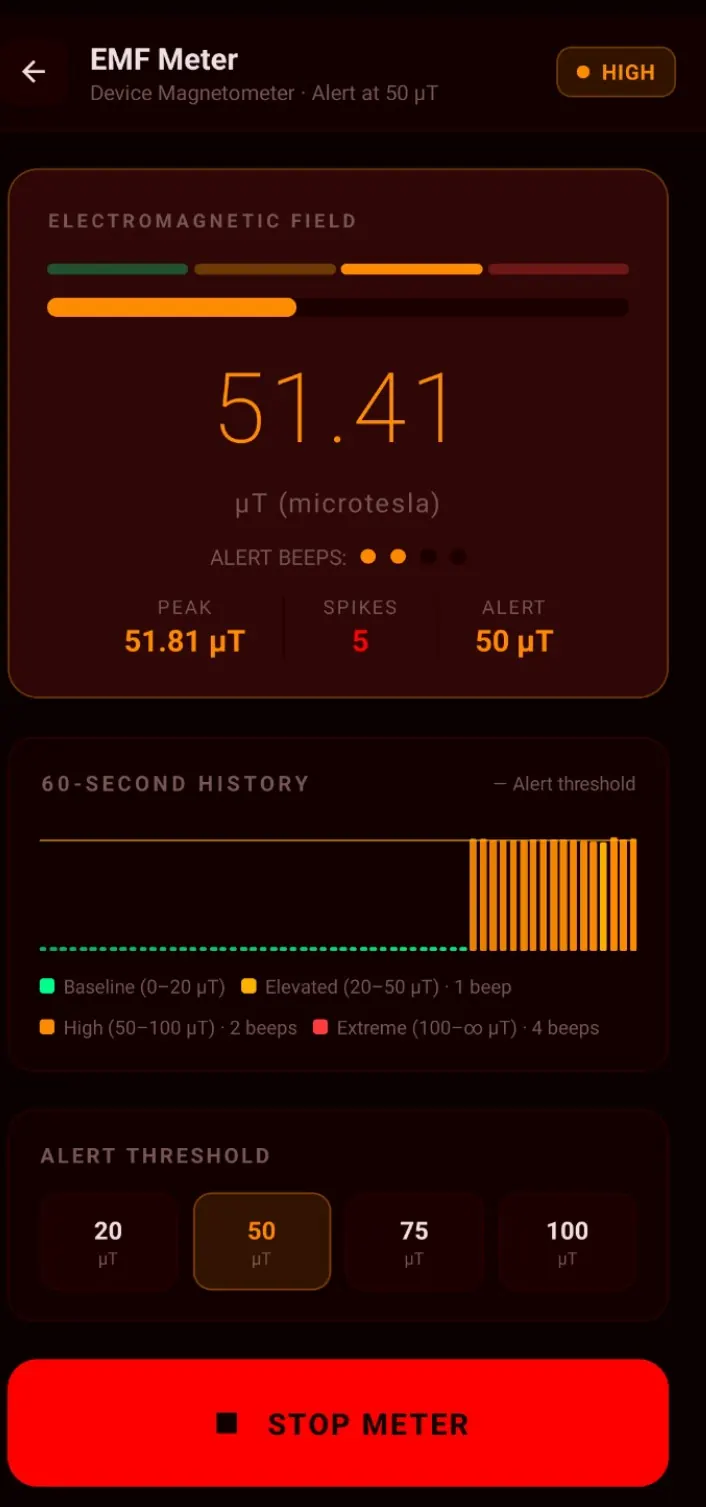
EMF meters, audio recorders, thermal cameras, carbon monoxide detectors and low-frequency microphones all measure physical conditions. None of them detects spirits. A good course teaches calibration, false positives, and how to log readings with time and location so they can be reviewed later. It should also tell you what you do not need to buy when you start.
4. Safety
Investigations often happen at night, in old or unfamiliar buildings. A course should cover working in pairs, permission to enter, structural hazards, lighting, first aid, and when to stop. Carbon monoxide matters twice here: it is a common natural explanation and a real danger.
5. Ethics
People who call an investigator are often frightened. A good course teaches you to put their welfare first, refer them to a doctor, electrician or other professional when health or safety is involved, protect their privacy, respect property, perform no rituals, and never exaggerate evidence. "Inconclusive" is an honest result, and a course should teach you to say it.
Red flags when choosing a course
- It promises to prove that ghosts exist.
- It treats every EMF spike or noise as evidence.
- It never mentions natural explanations, safety or consent.
- It cannot tell you who teaches it or how much field experience they have.
- It claims to be the official course of an organisation it does not belong to. Check with that organisation directly.
Questions to ask before you enrol
- Who teaches it, and how many investigations have they actually done?
- Is it taught in a language you think in, such as Hindi or English?
- Does it teach you to write reports that someone else can check?
- How does it handle safety, consent and client welfare?
- Is it independent, or run by a particular organisation? Neither is wrong, but you should know which.
Rith Deb's course
Rith Deb's own courses are listed on the paranormal investigation course page. They are Rith's own programme, taught following Indian Paranormal Society methodology. They are not an Indian Paranormal Society course. For details, read that page.
If you are just starting, read How to Become a Paranormal Investigator in India first. Rith is also the author of the book How to Become a Paranormal Investigator.
About the author
Rith Deb is a Mumbai-based paranormal investigator in India and a core team member of the Indian Paranormal Society. He joined IPS in 2013, was directly mentored by Gaurav Tiwari and follows IPS methodology. His site states 13+ years of field experience and 200+ investigations.
FAQ: paranormal investigation course
What should a paranormal investigation course teach?
A good paranormal investigation course should teach a documented method, natural-cause checks first, how equipment works and fails, field safety, ethics with clients and honest written reports.
Can a paranormal investigation course prove ghosts exist?
No. A serious course teaches you to find out what caused an experience. Most reports have natural causes, and an honest course teaches you to call unexplained evidence inconclusive.
Do I need expensive equipment to start a paranormal investigation course?
No. You can start learning the method with a phone and a notebook. A good course teaches what each tool measures and what you do not need to buy yet.
How do I choose a paranormal investigation course in India?
Check who teaches it and their field experience, whether it is in a language you think in, and whether it covers natural causes, safety, ethics and report writing.
Is Rith Deb's course an Indian Paranormal Society course?
No. Rith Deb's courses are his own programme, taught following Indian Paranormal Society methodology. They are not an Indian Paranormal Society course.
Train with Rith Deb
Get on the waitlist for the next intake of the Rith Deb Paranormal Academy.
JOIN THE WAITLIST