Is Paranormal Activity Real? A 13-Year Investigator's Honest Position
Reported paranormal experiences are real. Roughly 80–85% of them can be explained by environmental factors — infrasound, carbon monoxide, EMF variation, acoustics, and psychology. About 15–20% remain inconclusive, and 2–3% sit in a category that 13 years of investigation has not been able to fully account for.
The Two Answers People Expect
People ask me this expecting one of two answers. Either "Yes, absolutely, I've seen things that will terrify you" — which is what they get from entertainment content. Or "No, it's all explainable, ghosts don't exist" — which is what they get from sceptic channels.
My actual answer, after 13 years and more than 200 documented investigations across India, is more specific than either of those. And I think it is more useful.
What I Mean When I Say Paranormal Activity
First, precision matters. Paranormal activity is not one phenomenon. It is a broad category people use to describe wildly different things:
- Ghost sightings and apparitions
- Unexplained sounds (footsteps, voices, knocking)
- Physical disturbances (objects moving, doors opening)
- Temperature anomalies (cold spots, sudden drops)
- Electromagnetic anomalies
- Feelings of presence, being watched, unease
- Documented EVP (Electronic Voice Phenomena)
- Full possession and entity encounters
What I Can Say Definitively
Reported paranormal experiences are real. The experiences people report are genuine. They felt or saw or heard something that frightened them. The experience itself is real. My job is to find out what produced it.
Environmental factors cause the majority of reported paranormal experiences. This finding has been the most consistent across my 200+ investigations.
- Infrasound — low-frequency sound below 20Hz from HVAC, traffic, wind on structures. In the 18–19Hz range it produces unease, sense of presence, visual disturbances. The single most common environmental explanation I find.
- Carbon monoxide — low-level CO exposure causes headaches, disorientation, visual and auditory disturbances, and at severe levels, hallucinations. A slow leak from a faulty stove or water heater can produce months of "paranormal" activity.
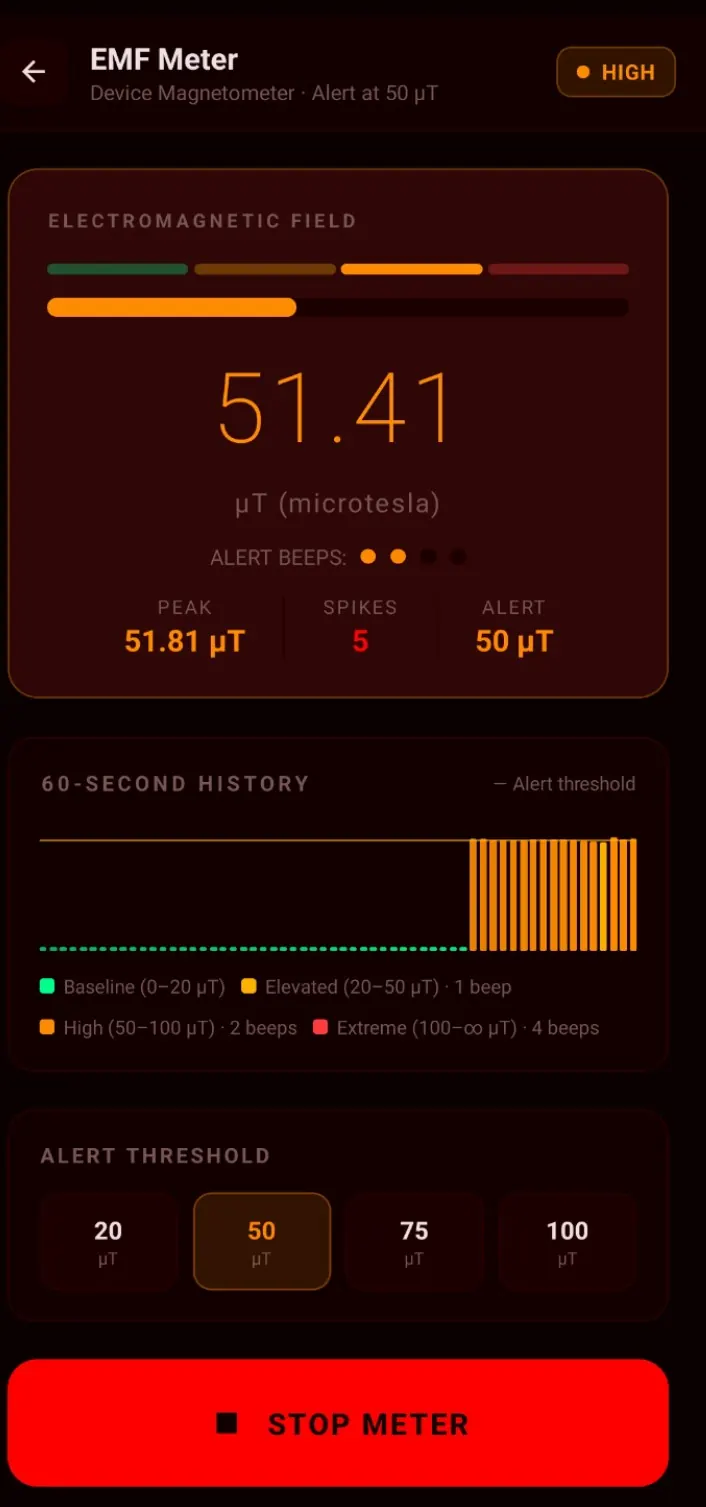
- Electromagnetic field variation — high or inconsistent EMF from old or faulty wiring produces unease and the feeling of being watched. Common in older Indian buildings with deteriorating electrical infrastructure.
- Acoustics — old stone buildings, long corridors and specific geometries produce disorienting sound behaviour. Sounds appear from wrong directions; echoes read as separate sources.
- Psychology — expectation and suggestion have measurable effects on perception. If you enter a building you've been told is haunted, you will genuinely perceive it differently. This is documented neuroscience, not a character flaw.
What I Cannot Explain
Here is where I will lose the sceptics and probably disappoint the believers simultaneously.
Roughly 15–20% of what I have documented contains anomalies I have not been able to fully account for using the environmental framework above. Some are inconclusive — equipment readings outside normal parameters, audio captures that don't match the acoustic baseline, thermal anomalies without obvious structural cause. These go in the case file as unresolved.
A smaller percentage — perhaps 2–3% of everything across 13 years — sits in a category I find genuinely difficult to explain. Cases where multiple independent instrument readings converge on the same anomaly at the same time. Cases where environmental factors have been systematically ruled out and the phenomena continued.
I am not going to tell you these cases prove ghosts exist. I do not have enough evidence for that claim. I will tell you they are there, that I have documented them, and that they are the reason I am still doing this work after 13 years.
Why This Answer Matters
The two popular positions — "everything is a ghost" and "nothing paranormal exists" — both fail the people who contact investigators for help.
If you tell a frightened family their home is definitely haunted, you have amplified their fear without evidence and potentially sent them toward ritual practitioners who will charge them to "fix" something that may be a carbon monoxide leak threatening their health.
If you tell them nothing paranormal exists and it is all in their heads, you have dismissed documented evidence and failed to find the 2–3% of cases that sit outside what environmental explanations cover.
The honest position is more difficult than either extreme. It requires saying: most of this can be explained. Some of it cannot. Every case deserves proper investigation rather than a predetermined conclusion.
What Evidence-Based Investigation Looks Like
When I enter a location where paranormal activity is reported, my job for the first part of every investigation is to find the environmental explanation. I look for the infrasound source. I check for CO. I map the EMF baseline. I document the acoustic properties.
If I find the explanation: the case resolves. The family is helped. The phenomena typically become manageable or disappear when the source is addressed.
If after thorough environmental assessment the anomalies remain: those cases stay open. The documentation goes into the record. I return if circumstances allow. After 13 years, that is where my answer sits: mostly explainable, occasionally not, always worth investigating properly.
FAQ
Have you ever seen a ghost?
I have documented anomalies I cannot explain. Whether they constitute "a ghost" depends on how you define the word. I have not had a visual encounter with an apparition that I could not attribute to an environmental or psychological cause.
Do haunted places in India exist?
Yes — in the sense that specific locations consistently produce documented phenomena outside normal environmental parameters. Bhangarh Fort, Mukesh Mills, Lambi Dehar Mines and several residential properties I have investigated fall into this category. Whether "haunted" is the right descriptor is exactly what investigation is designed to answer.
Why do most haunted places turn out to be not haunted?
Because "haunted" is a cultural label applied to unusual experiences. The unusual experiences are real. The environmental factors that produce them are real. The label is imprecise.
Can I learn to investigate these things myself?
Yes. The methodology — case intake, baselines, equipment, evidence assessment, reporting — is exactly what my course programme is built around.
Train with Rith Deb
Get on the waitlist for the next intake of the Rith Deb Paranormal Academy.
JOIN THE WAITLIST